Gamified AI learning app to teach young adults real-world skills, made during a 48-hour designathon.
Gamified AI learning app to teach young adults real-world skills, made during a 48-hour designathon.
Overview
Overview
Role
Product Designer
Timeline
48 hours (April 2025)
Team
4 designers
Skills
User Research, Wireframing, Lo-fi, Brand Identity
For many young adults, navigating "adulting" tasks like budgeting, taxes, and insurance can feel incredibly stressful and overwhelming.
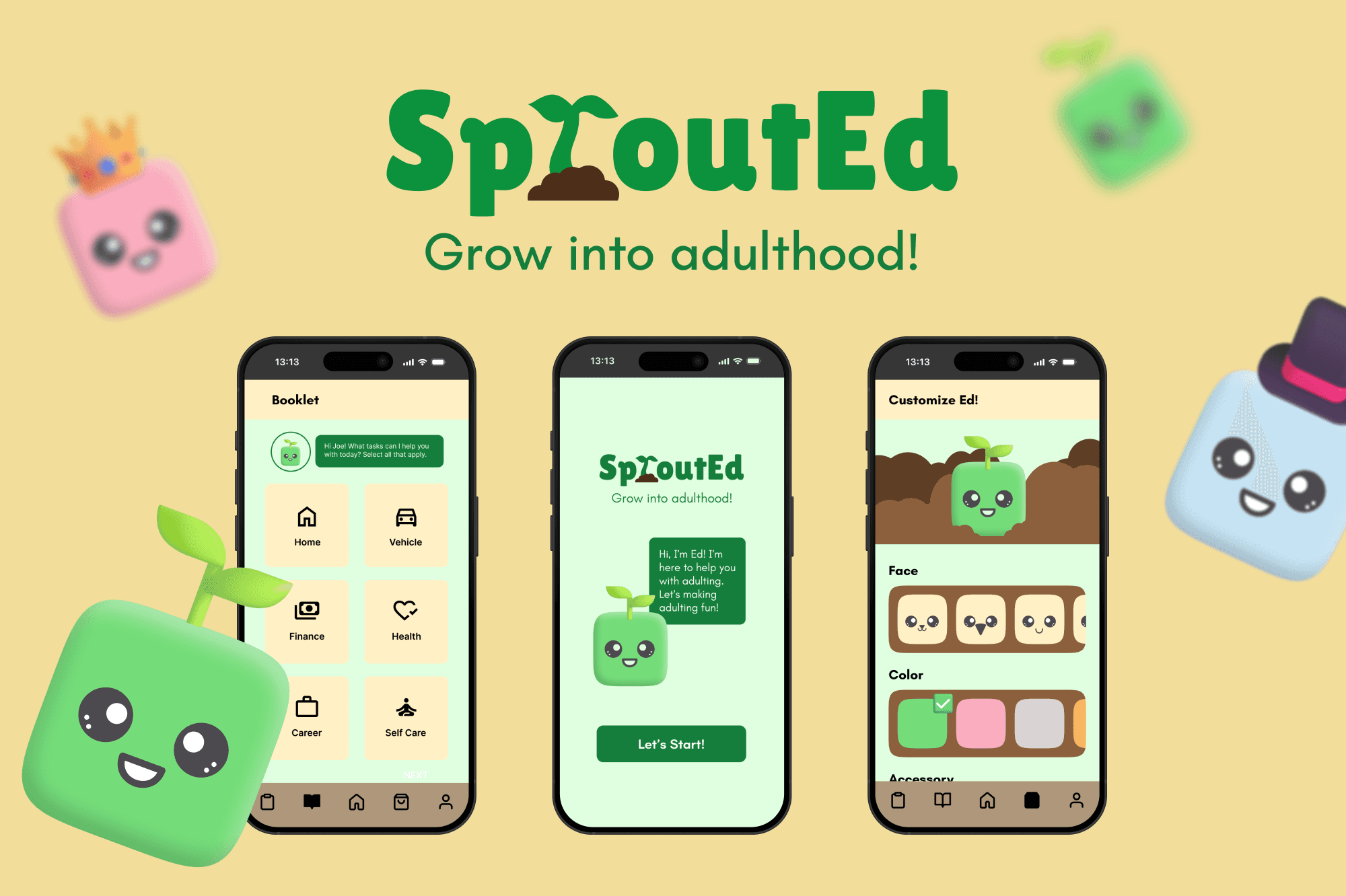
As part of the 2025 UCI Design-a-thon, my team and I came up with SproutEd, a gamified learning app designed to help solve this problem. SproutEd blends a conversational AI coach, personalized action plans, and gamified learning to break down intimidating real-world responsibilities into manageable milestones.
My contributions included conducting and synthesizing insights from user interviews, and leading the wireframing, including UX flow and initial lo-fi screens.
Role
Product Designer
Timeline
48 hours (April 2025)
Team
4 designers
Skills
User Research, Wireframing, Lo-fi, Brand Identity
For many young adults, navigating "adulting" tasks like budgeting, taxes, and insurance can feel incredibly stressful and overwhelming.
As part of the 2025 UCI Design-a-thon, my team and I came up with SproutEd, a gamified learning app designed to help solve this problem. SproutEd blends a conversational AI coach, personalized action plans, and gamified learning to break down intimidating real-world responsibilities into manageable milestones.
My contributions included conducting and synthesizing insights from user interviews, and leading the wireframing, including UX flow and initial lo-fi screens.
Problem
Problem
The designathon's prompt, Beyond Our Horizons, challenged us to create a solution for navigating uncertainty, making the future less overwhelming and more human.
We realized that for many young adults, this "uncertainty" lies in everyday tasks, from managing finances to handling household repairs. This common struggle with procrastination, decision paralysis, and lack of centralized education around these skills became our core problem to solve.
The designathon's prompt, Beyond Our Horizons, challenged us to create a solution for navigating uncertainty, making the future less overwhelming and more human.
We realized that for many young adults, this "uncertainty" lies in everyday tasks, from managing finances to handling household repairs. This common struggle with procrastination, decision paralysis, and lack of centralized education around these skills became our core problem to solve.
Research
Research
I led part of our research process, which included 15 interviews focusing on understanding young adults' emotional responses to "adulting" tasks. Through a quick session of affinity mapping, our interviews revealed common themes of emotional distress, procrastination, and the desire to be self-reliant and not ask others for help:
"Sometimes I feel overwhelmed and then I have to self motivate to get started on task."
"My chest literally tightens and I feel useless but it still somehow isn’t enough to get me to do it."
"I try to look for guides or people online that did the same task before me so I have something to follow."
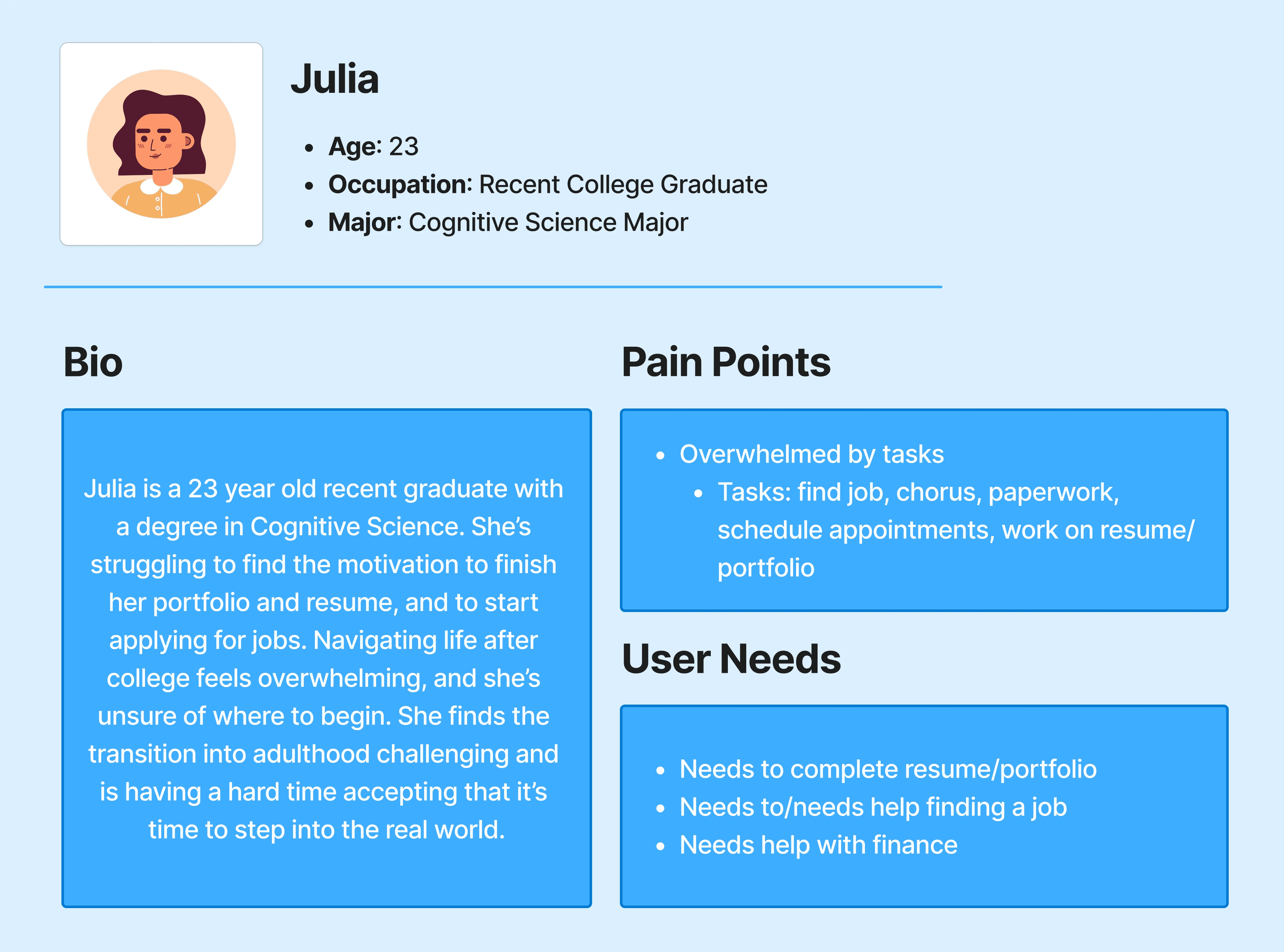
Through these interviews, we were able to synthesize our results into a user persona: Julia, a fresh college grad still figuring her way through adult life.
User Persona
Following these insights, my team and I gained a clear vision and were able to set the following core design goals:
Motivate action through gamification:
Reduce procrastination and decision paralysis by transforming overwhelming tasks into rewarding, goal-oriented challenges.
Empower self-reliance:
Equip users with the confidence and tools to independently navigate new challenges by offering clear, adaptable guidance.
Simplify complex information:
Convert intimidating real-world responsibilities into manageable milestones through intuitive, easy-to-follow content like tutorials or checklists.
Process
Process
Our first step was to translate our research insights into tangible features. With the time constraint in mind, we prioritized features that directly addressed our key user pain points, while led us to design three core features:
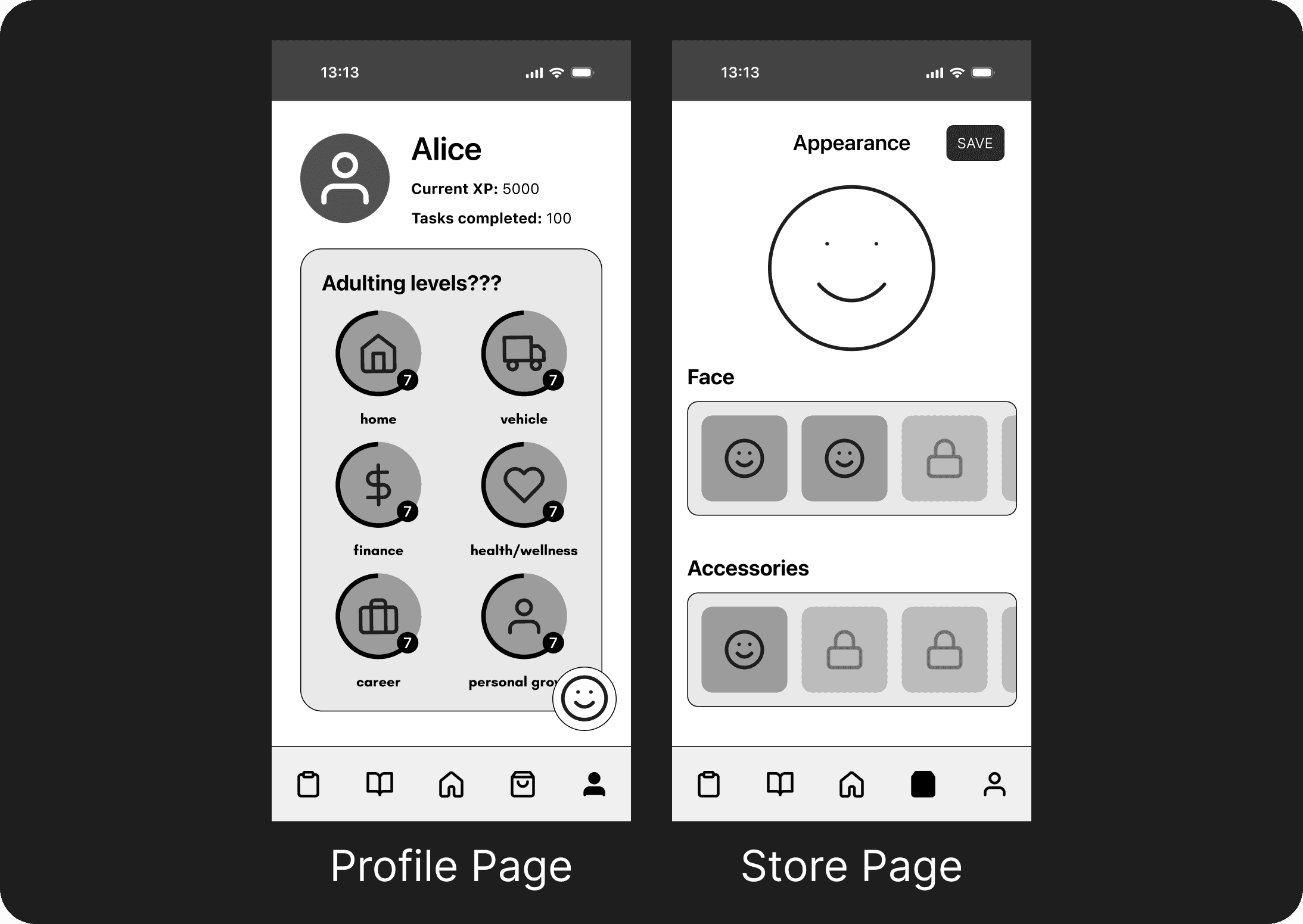
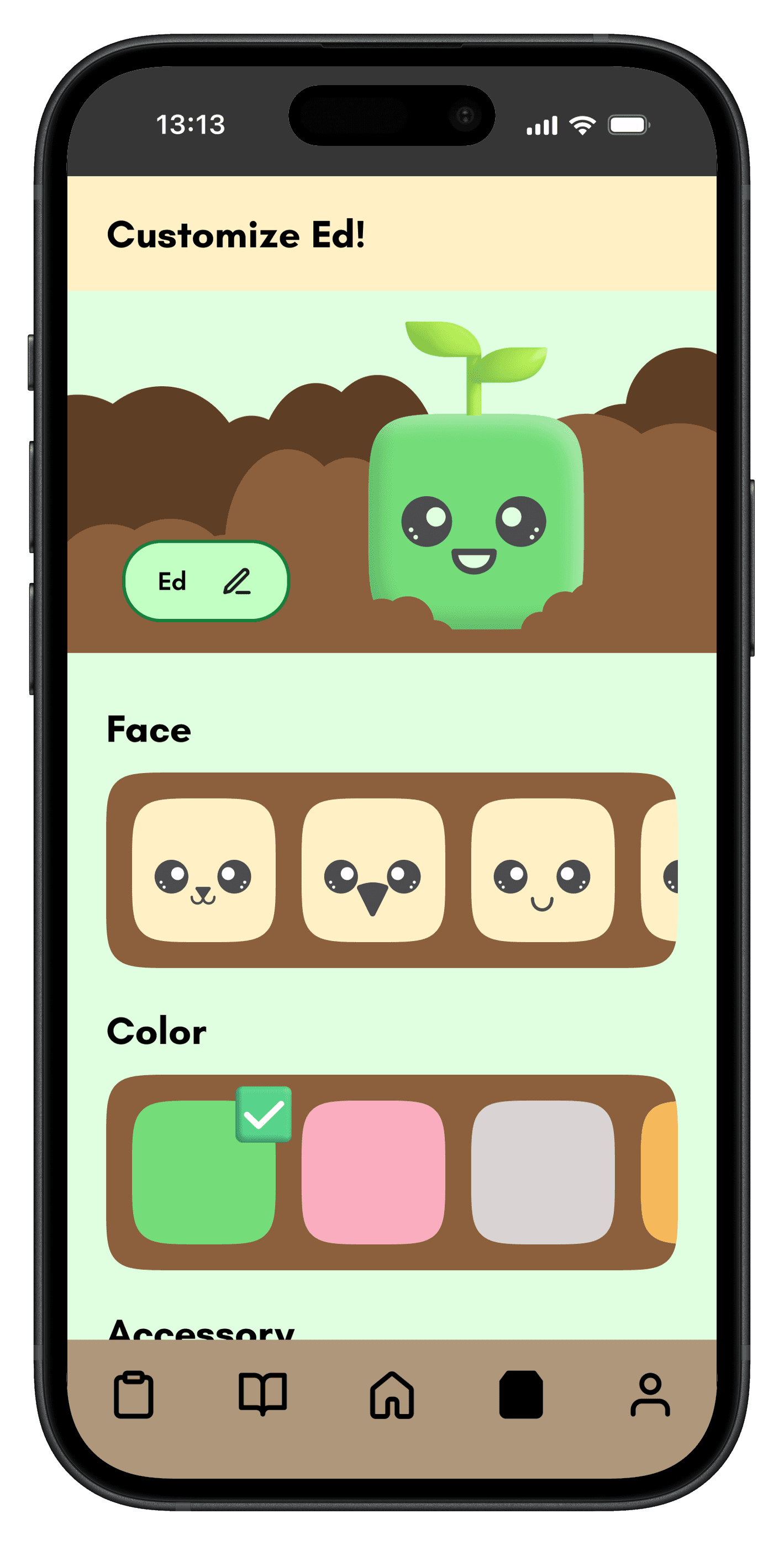
Gamification: Users earn experience through completing real world tasks, unlocking in-app customization options for their personal AI coach avatar. This turns the traditional friction and decision paralysis into a motivational journey
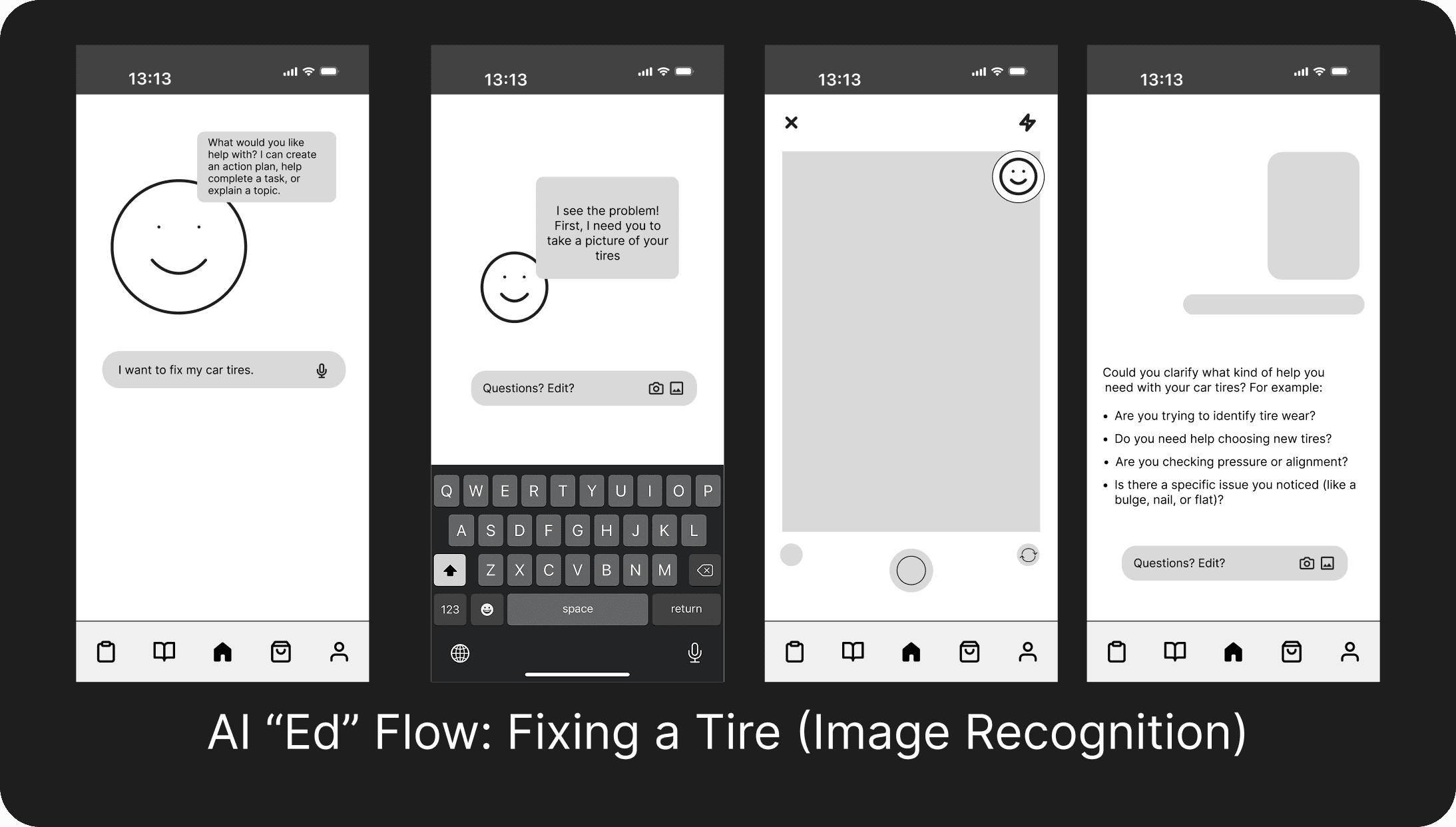
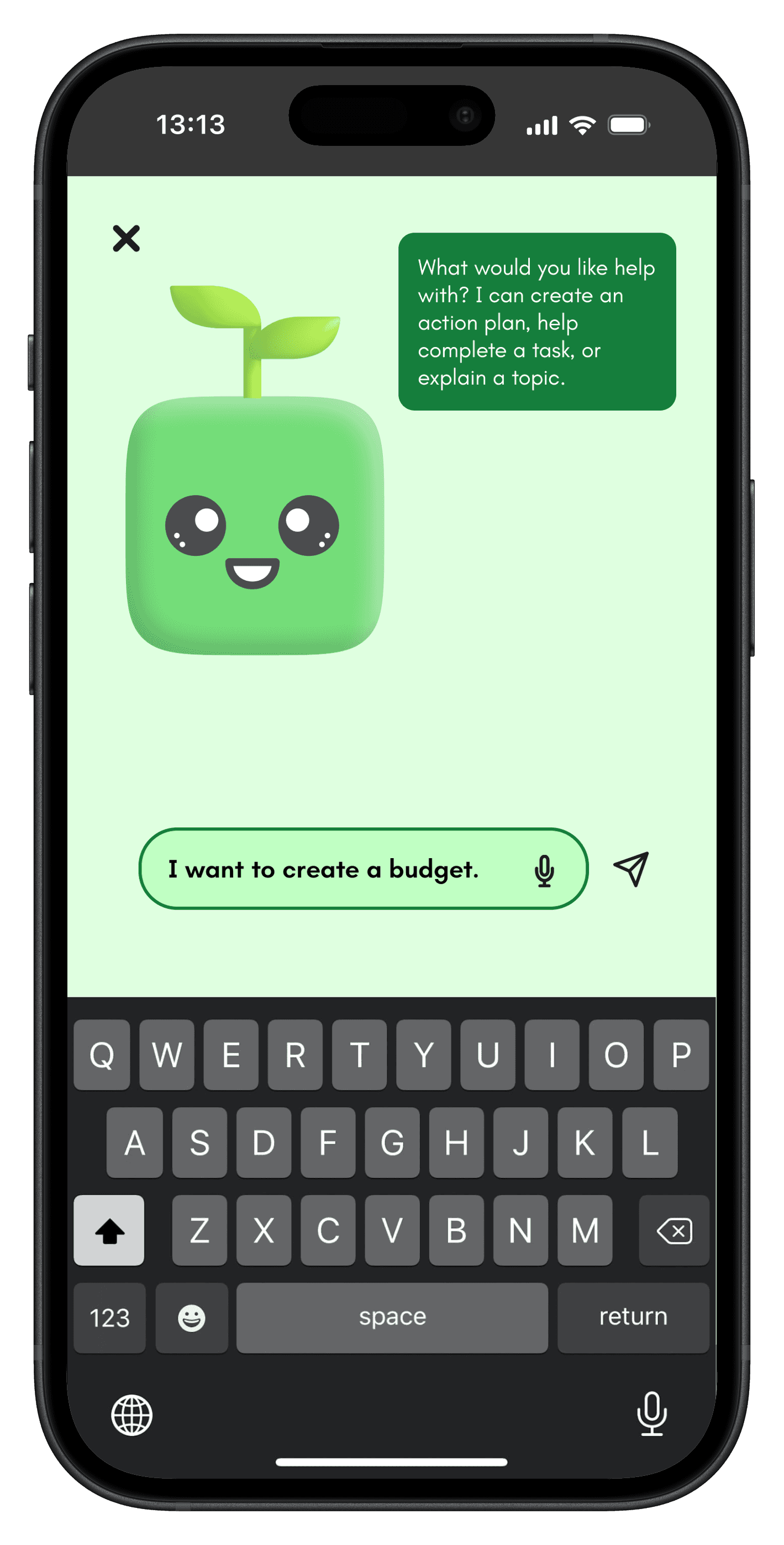
Ed, our personalized AI support coach, guides users through unfamiliar adulting tasks. He can create customized action plans for broad goals by breaking them into manageable steps, supports voice interaction, and includes a camera feature for hands-on guidance with visual tasks like home appliance repair. I led the wireframing for this section, imagining Ed as a chatbot-like interface where users could ask anything, and Ed would intelligently pick the right course of action for the user.
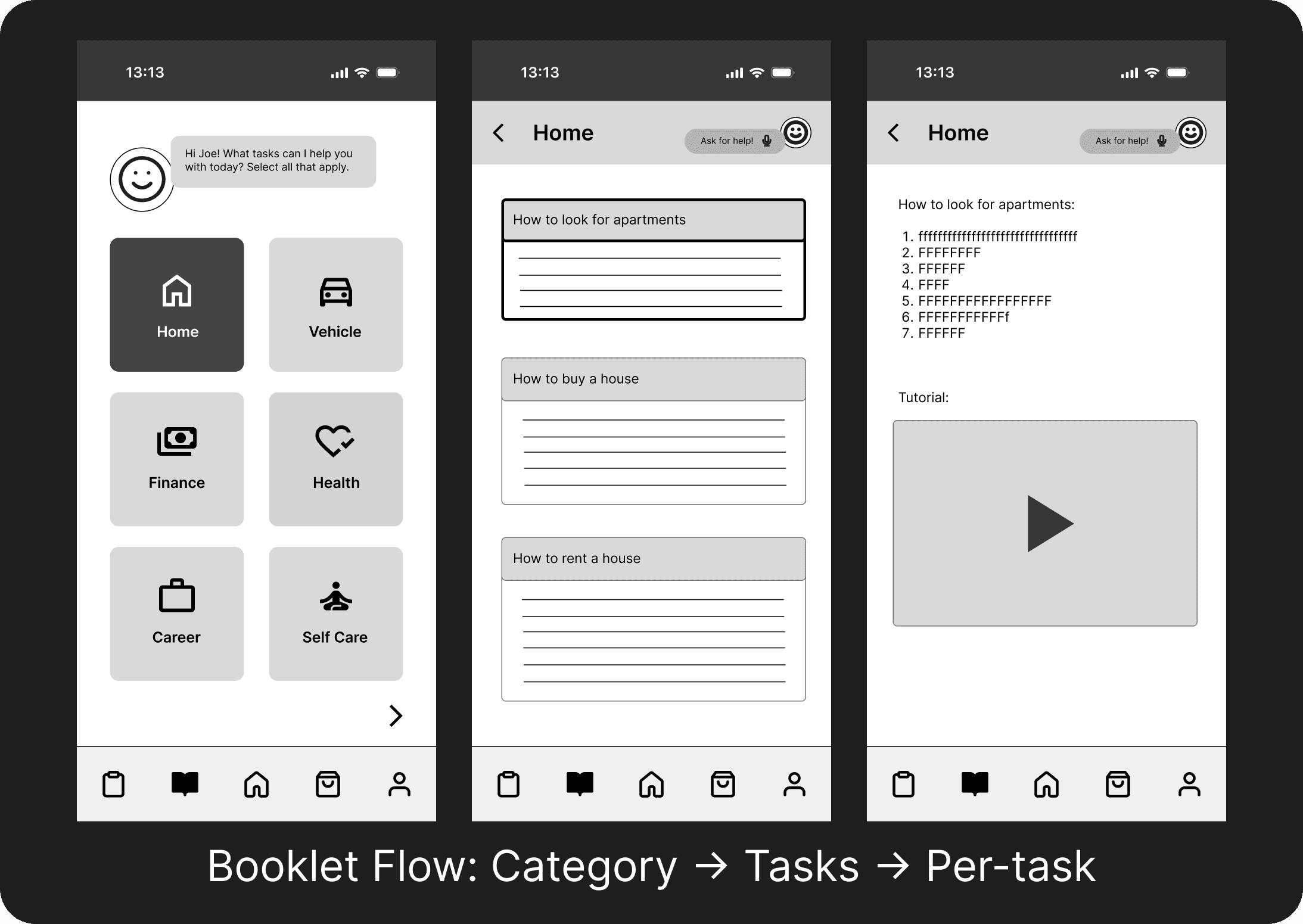
Instruction booklet: Our instructional booklet provides quick access to more common adulting tasks such as renting an apartment or filing taxes, with video tutorials and easy-to-follow steps.
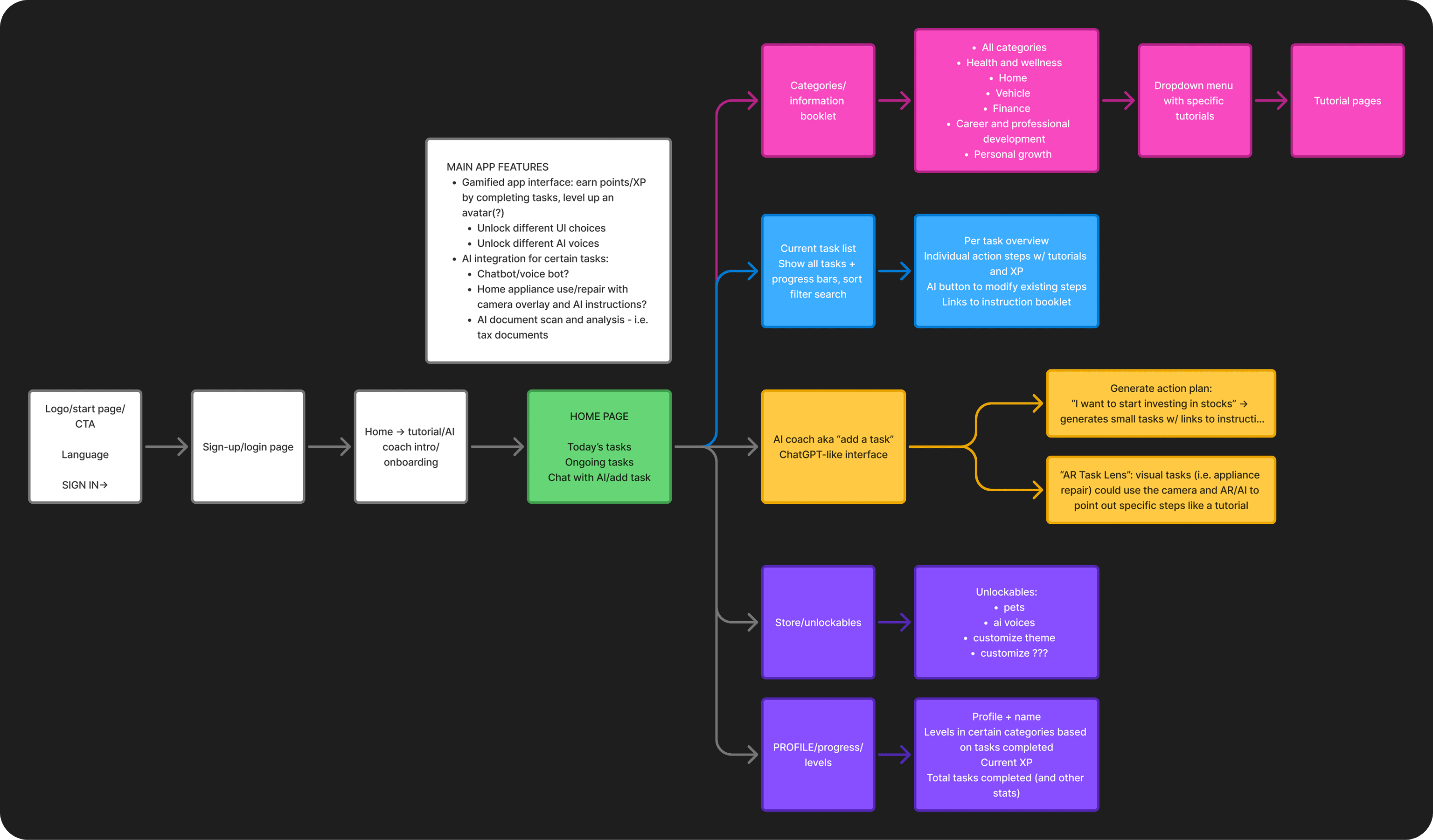
Once we had our core features, I took the lead on mapping out the user flow. My goal was to create a seamless journey that would guide users between these features intuitively without them feeling overwhelmed.
UX Flow
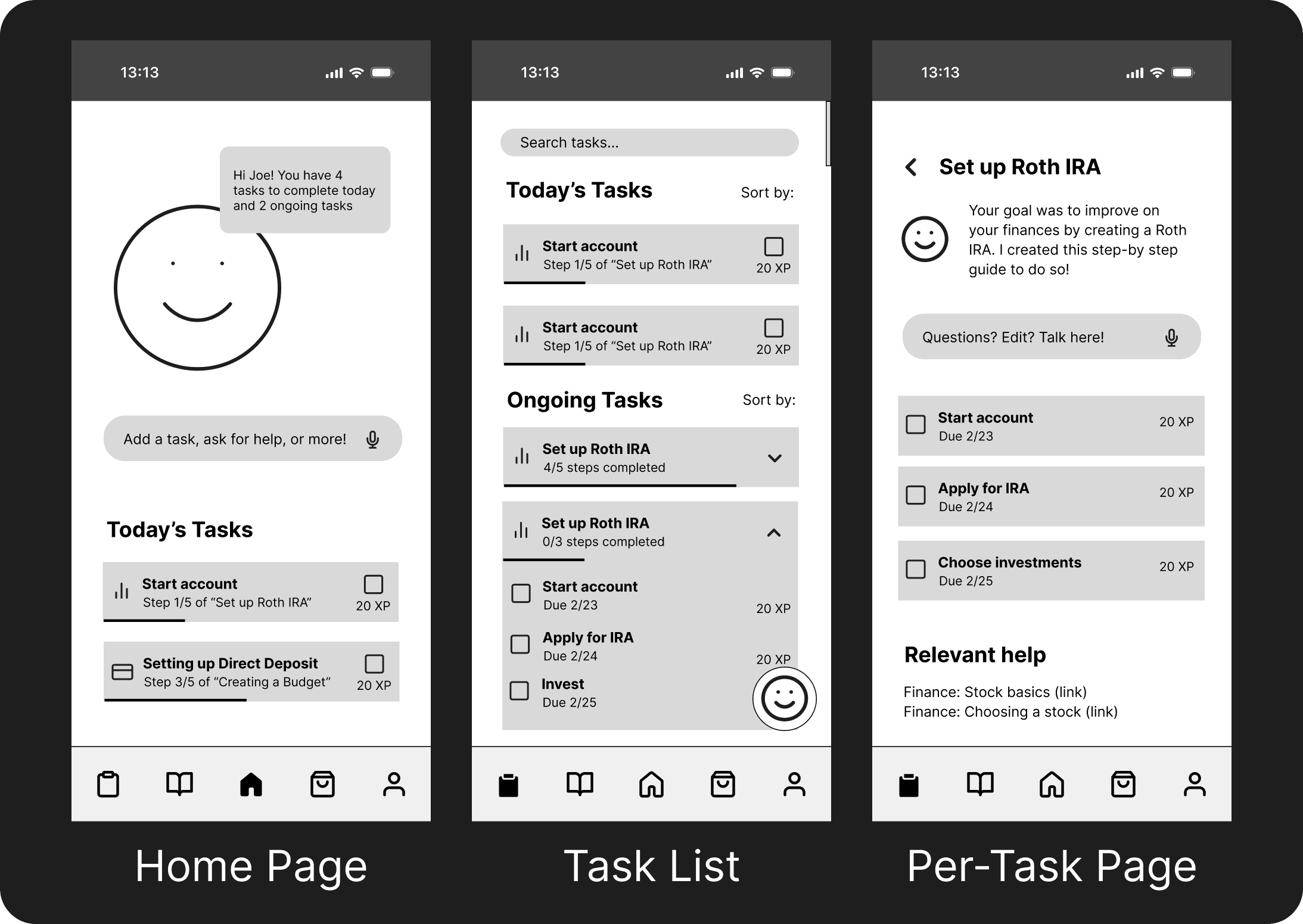
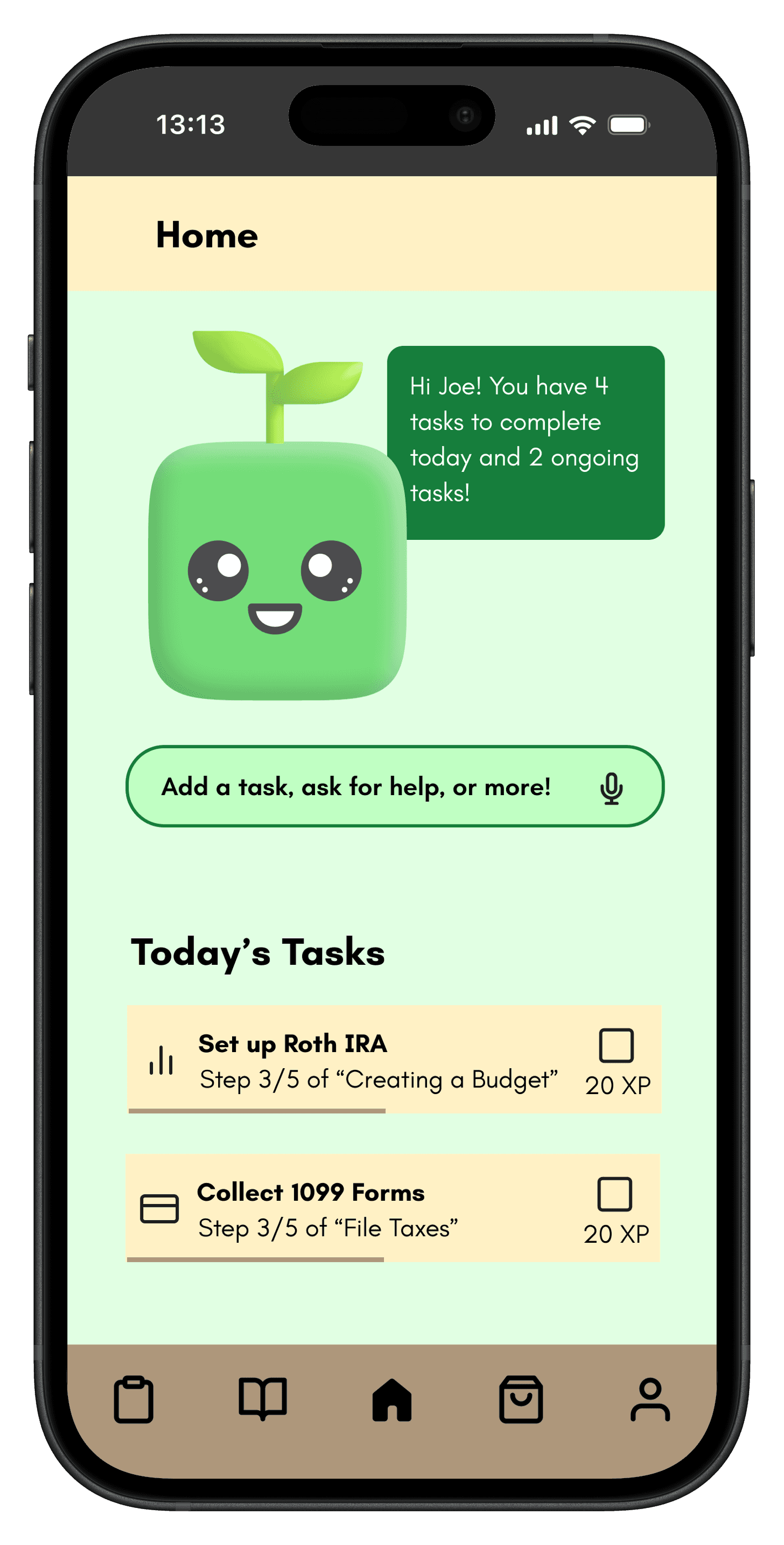
Guided by the UX flow, we finished up the rest of the prototype, working to ensure that all of our features flowed well together. The homepage was my main task; I focused on making the most important features prominently visible, such as having Ed take up the entire top section of the home page and also having him appear in the corner of every screen.
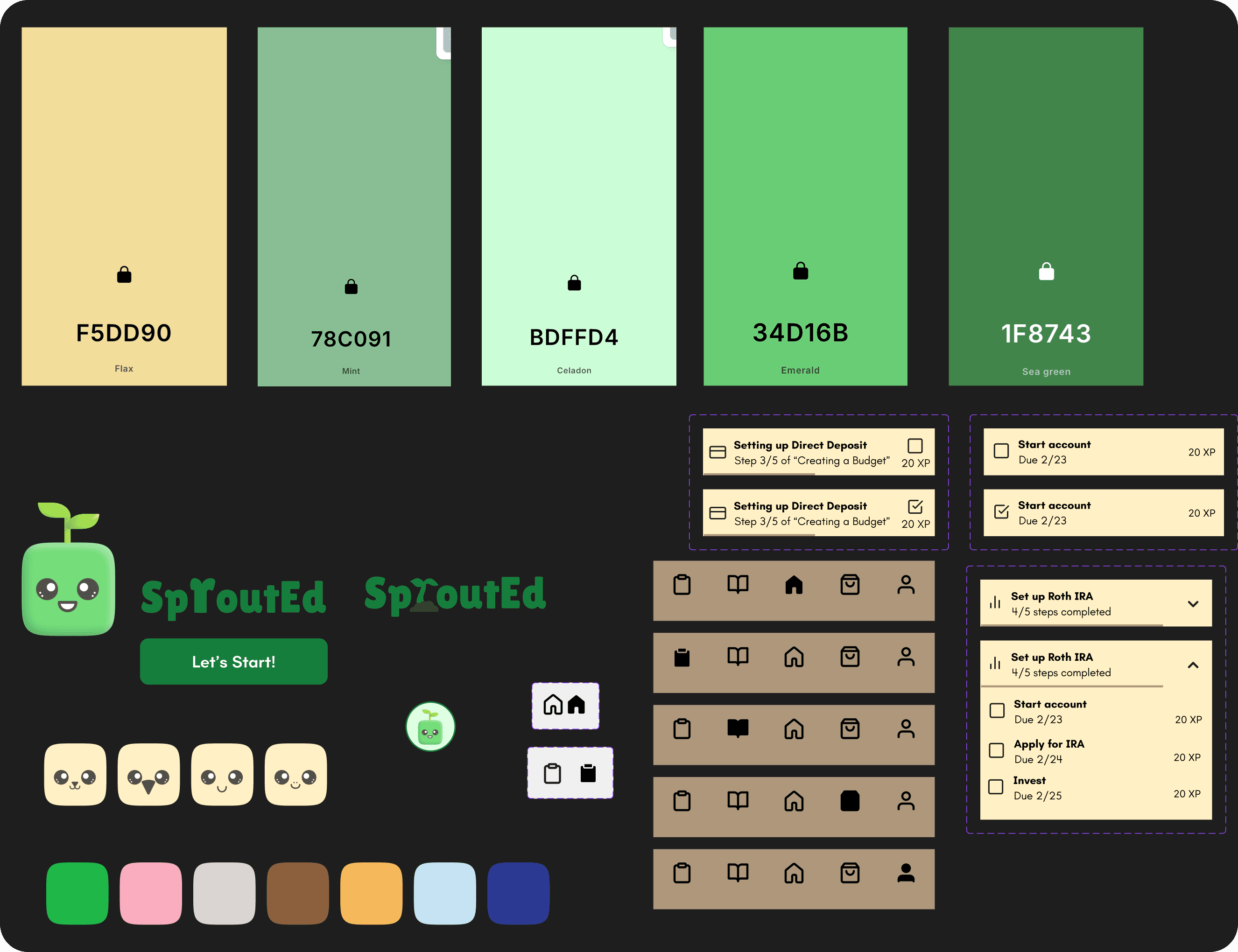
The team then collaborated on the style guide. After we developed a few options, I took the lead in finalizing the style guide's color palette and typography, ensuring it aligned with our research and brand identity.
The design was heavily influenced by our research, as we wanted the visuals to feel like a helping hand, not another source of stress. We designed the "Sprout" mascot and brand identity around a sprouting plant, symbolizing the growth and confidence young adults would gain from using the app.
Style Guide/UI Library
Our first step was to translate our research insights into tangible features. With the time constraint in mind, we prioritized features that directly addressed our key user pain points, while led us to design three core features:
Gamification: Users earn experience through completing real world tasks, unlocking in-app customization options for their personal AI coach avatar. This turns the traditional friction and decision paralysis into a motivational journey
Ed, our personalized AI support coach, guides users through unfamiliar adulting tasks. He can create customized action plans for broad goals by breaking them into manageable steps, supports voice interaction, and includes a camera feature for hands-on guidance with visual tasks like home appliance repair. I led the wireframing for this section, imagining Ed as a chatbot-like interface where users could ask anything, and Ed would intelligently pick the right course of action for the user.
Instruction booklet: Our instructional booklet provides quick access to more common adulting tasks such as renting an apartment or filing taxes, with video tutorials and easy-to-follow steps.
Once we had our core features, I took the lead on mapping out the user flow. My goal was to create a seamless journey that would guide users between these features intuitively without them feeling overwhelmed.
UX Flow
Guided by the UX flow, we finished up the rest of the prototype, working to ensure that all of our features flowed well together. The homepage was my main task; I focused on making the most important features prominently visible, such as having Ed take up the entire top section of the home page and also having him appear in the corner of every screen.
The team then collaborated on the style guide. After we developed a few options, I took the lead in finalizing the style guide's color palette and typography, ensuring it aligned with our research and brand identity.
The design was heavily influenced by our research, as we wanted the visuals to feel like a helping hand, not another source of stress. We designed the "Sprout" mascot and brand identity around a sprouting plant, symbolizing the growth and confidence young adults would gain from using the app.
Style Guide/UI Library
Solution
Solution
At the end of the 48 hour designathon, we came away with a full high-fidelity prototype that directly addressed our user's core problem: anxiety and a lack of motivation.
With a clean, calming interface, helpful assistance from our AI coach, and a gamified task system that rewards progression, we were able to use thoughtful, user-centered design to turn a difficult topic into a positive, engaging experience. You can check out more details on our devpost and our Figma prototype!
Home Page
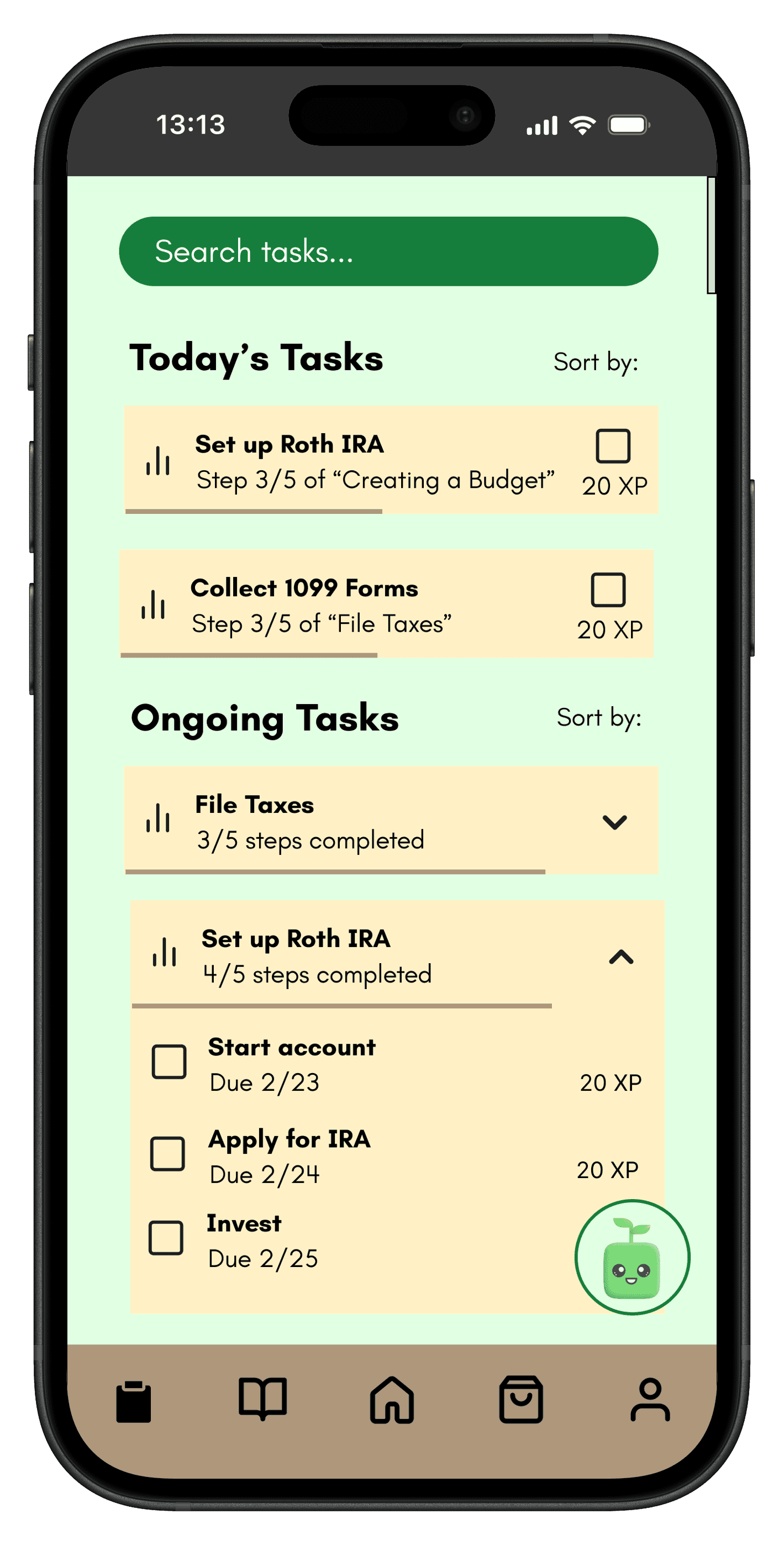
Task Page
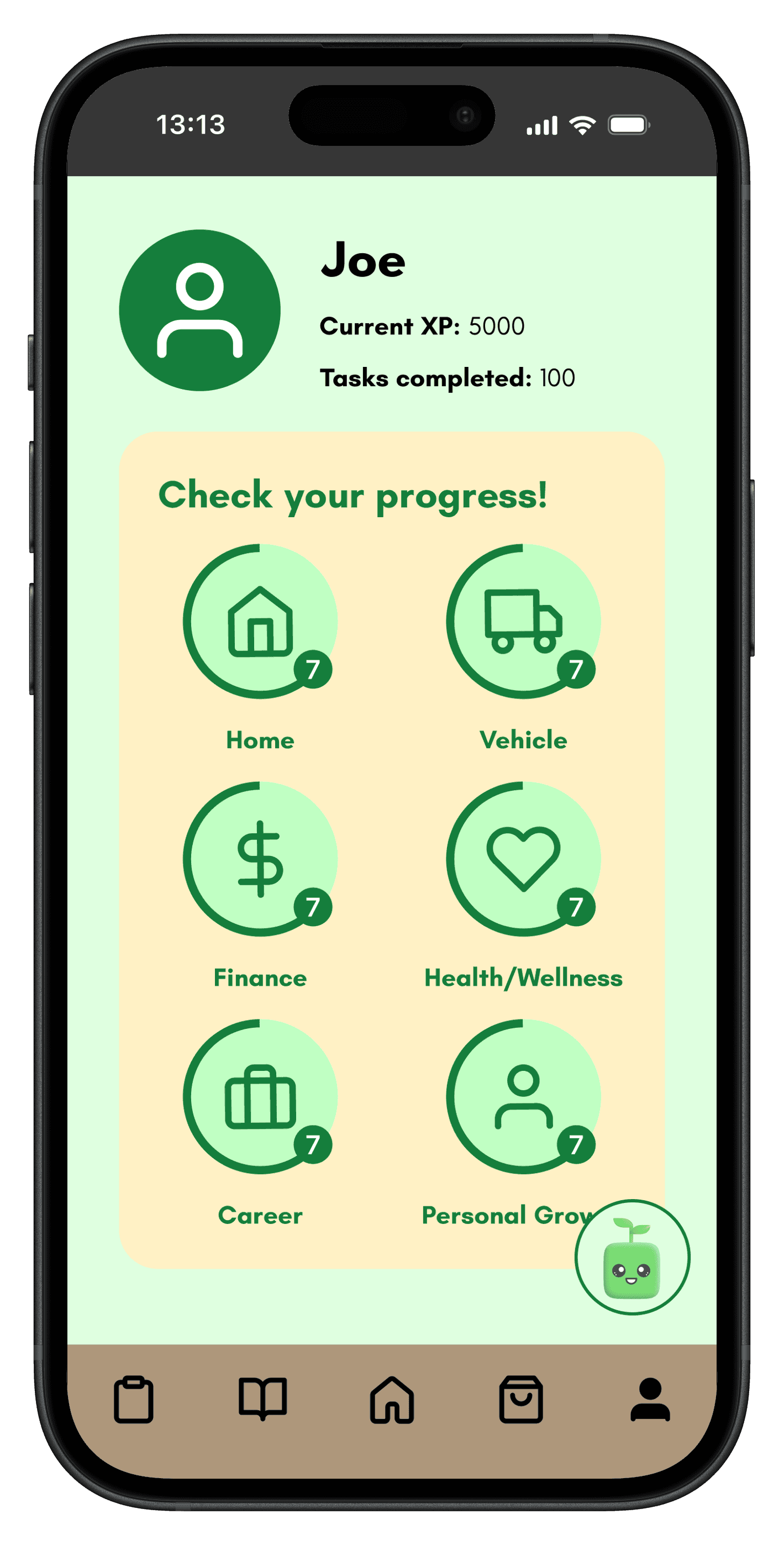
Profile Page
Store Page
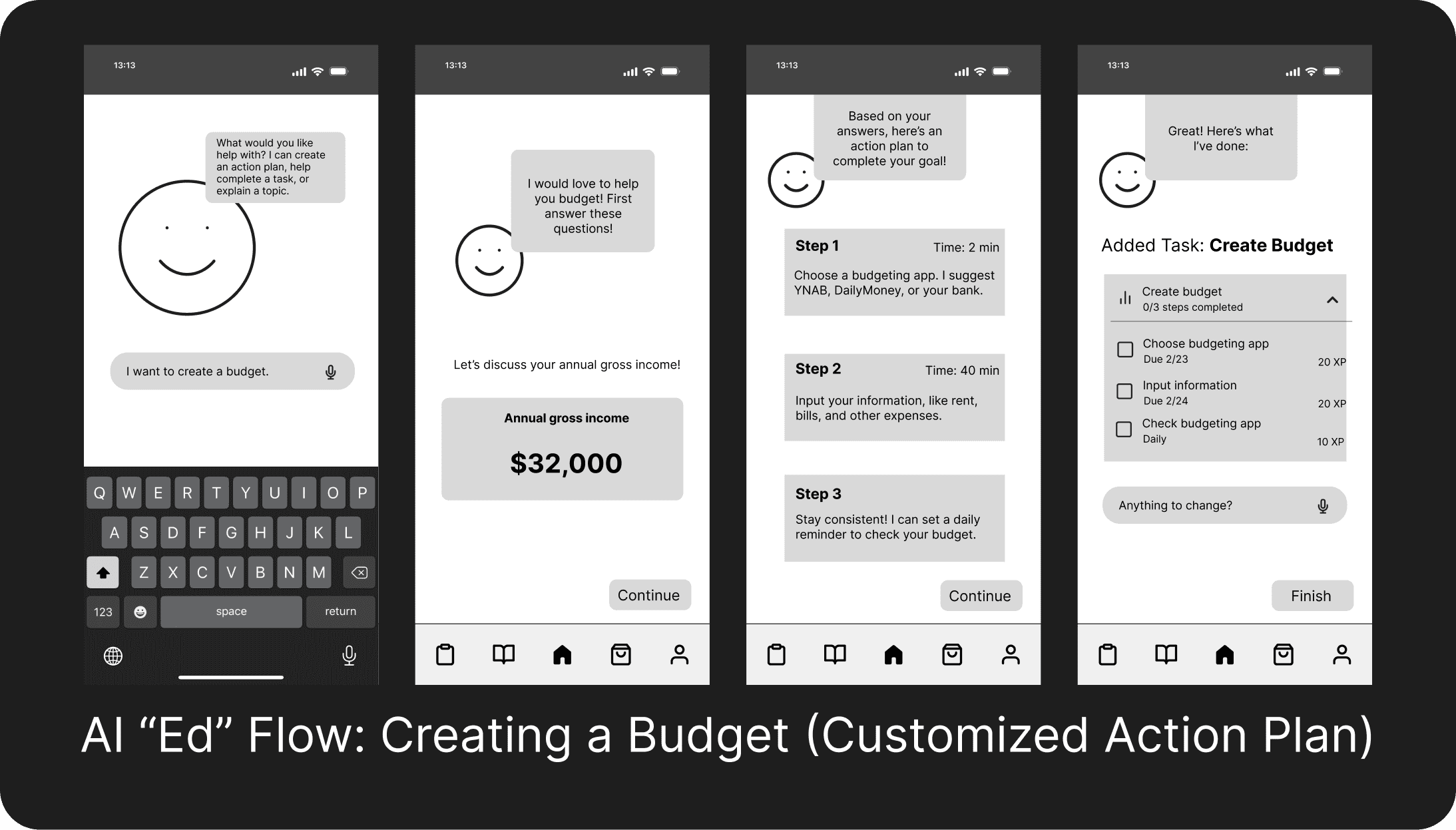
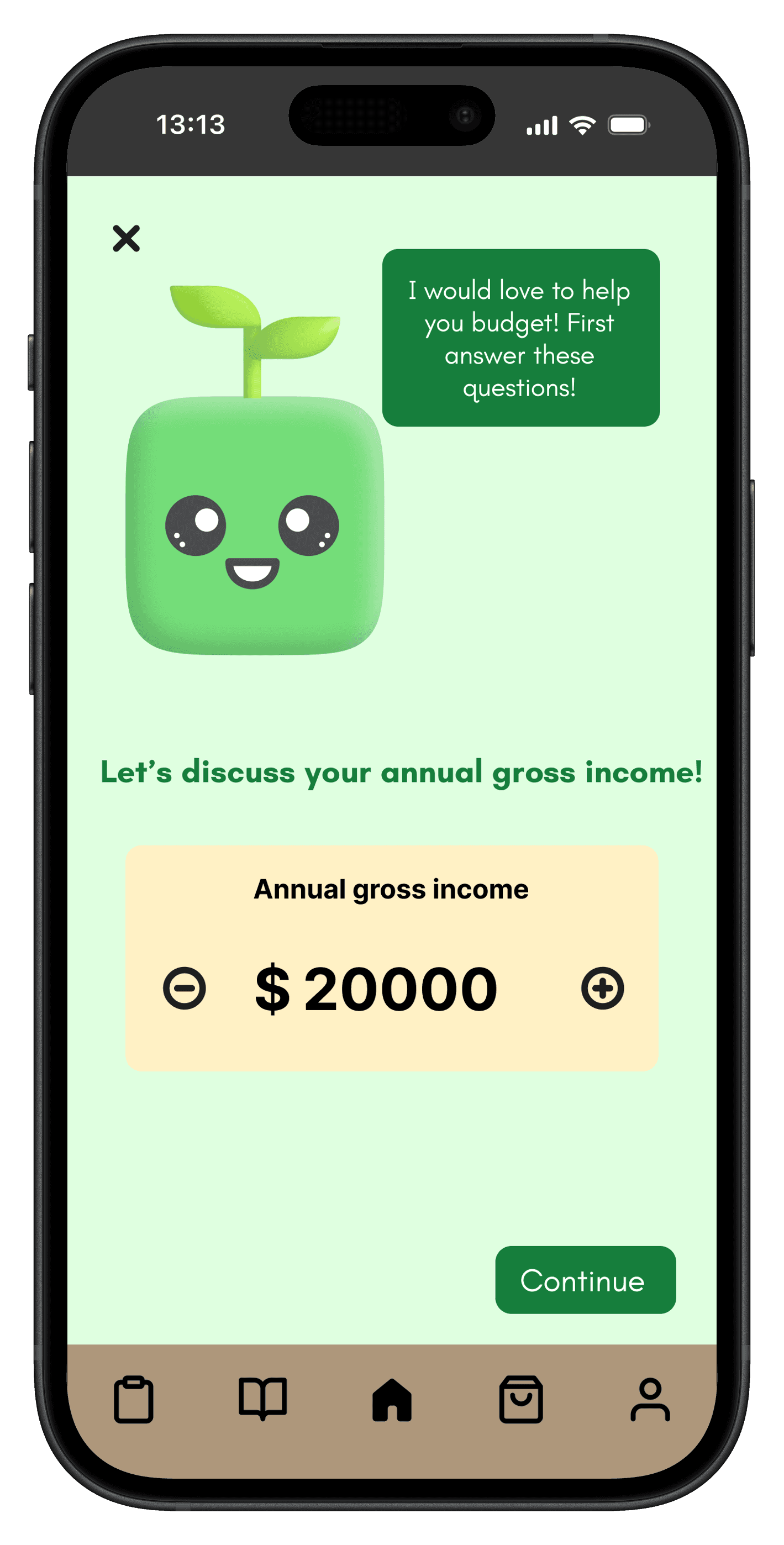
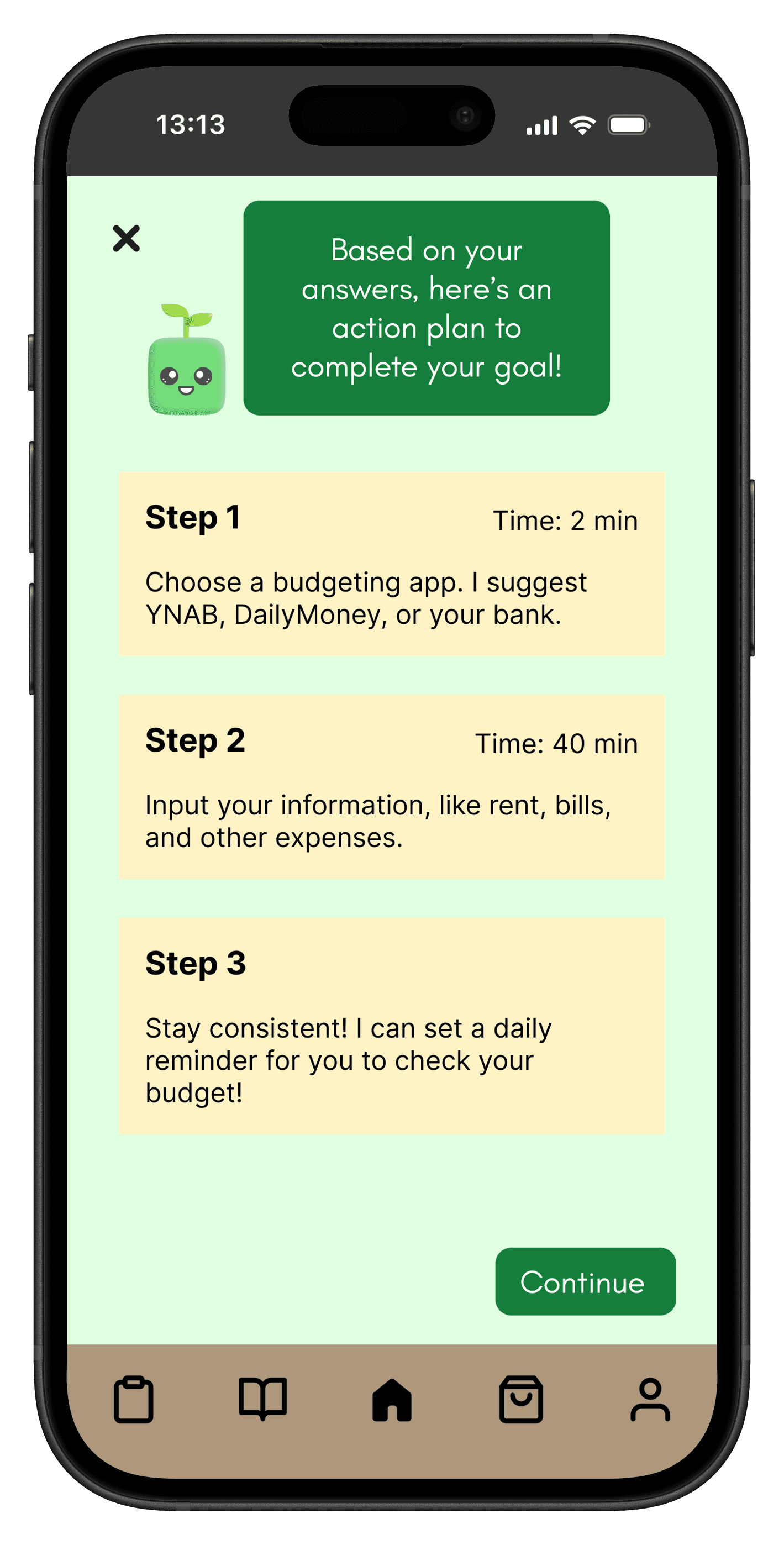
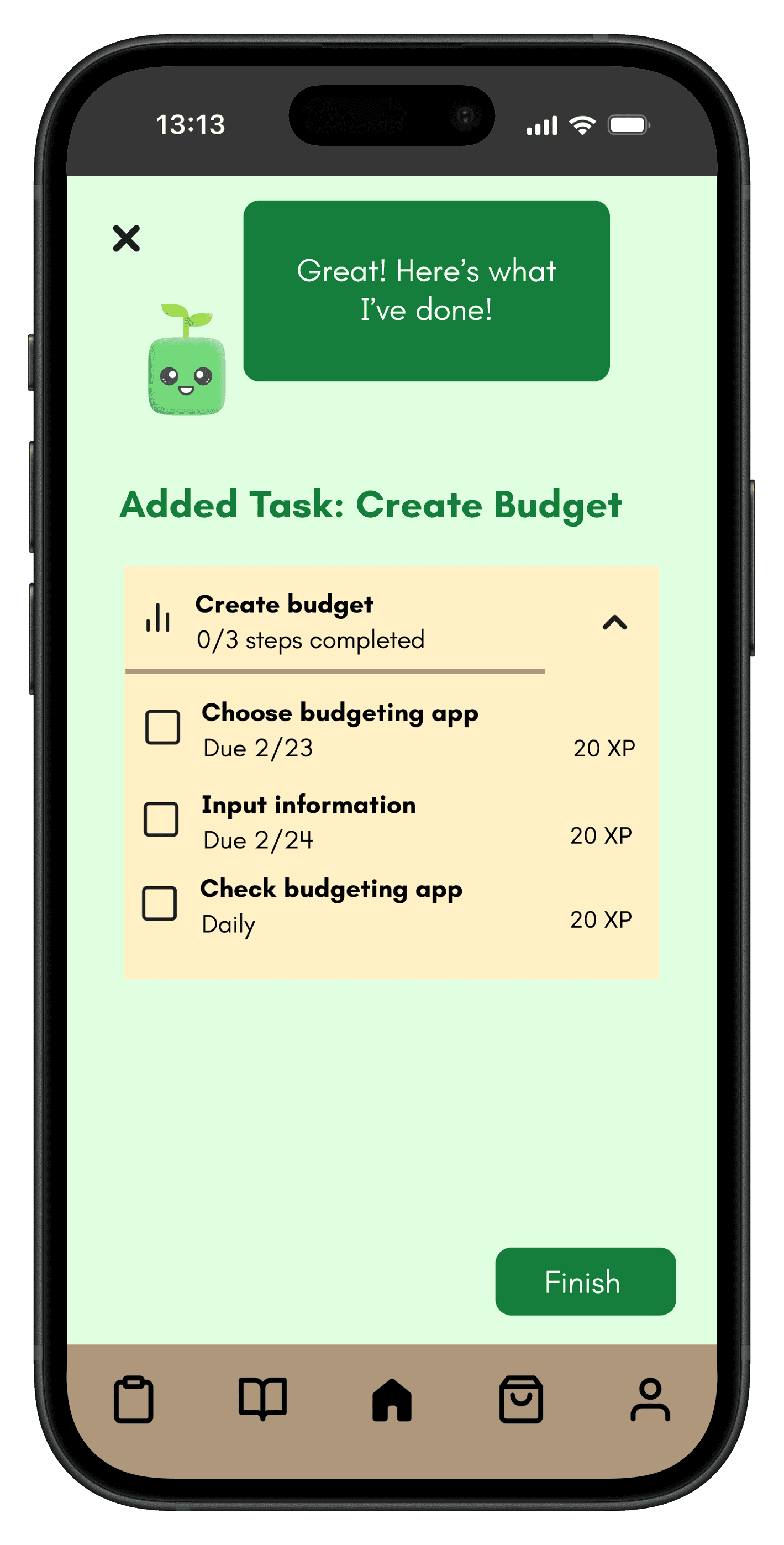
Here's one user flow I created that shows how Ed can turn a broad goal like "make a budget" into a manageable, step-by-step action plan.
Ask Ed to help you budget.
Ed asks relevant questions.
Ed creates a customized action plan.
Ed adds the plan to your task list.
Reflection
Reflection
This project taught me a great deal about the reality of working under pressure. As it was my team's first designathon, we faced challenges with time management and snap decision-making. Despite these challenges, we successfully created a full hi-fi prototype and a cohesive visual identity in just 48 hours.
My key takeaways from this experience were:
Learning to prioritize: With limited time, I learned how to identify the most critical user problems and focus on designing features that would have the biggest impact.
The power of collaboration: I reiterated my ability to give and receive constructive criticism, which was essential for making quick, thoughtful design decisions as a team.
Embracing iteration: Even with a tight deadline, I practiced rapid ideation and iterative testing, which helped us create a more refined and user-centered final product.
The experience reinforced my passion for user-centered design and my ability to deliver quality work under pressure. For next steps, I would conduct more extensive user testing to further validate our design decisions and explore additional gamification features to increase user engagement.